11.4.9 Building on brownfield sites
Srinakharinwirot University recognises the importance of redeveloping brownfield sites as part of its physical planning and long-term sustainability strategy. Rather than leaving such spaces unused, the university prioritises the transformation of underutilised or deteriorated areas into functional, modern facilities. This approach contributes to sustainability by reducing land degradation, making efficient use of limited urban space, and aligning campus development with principles of resource efficiency and environmental responsibility.
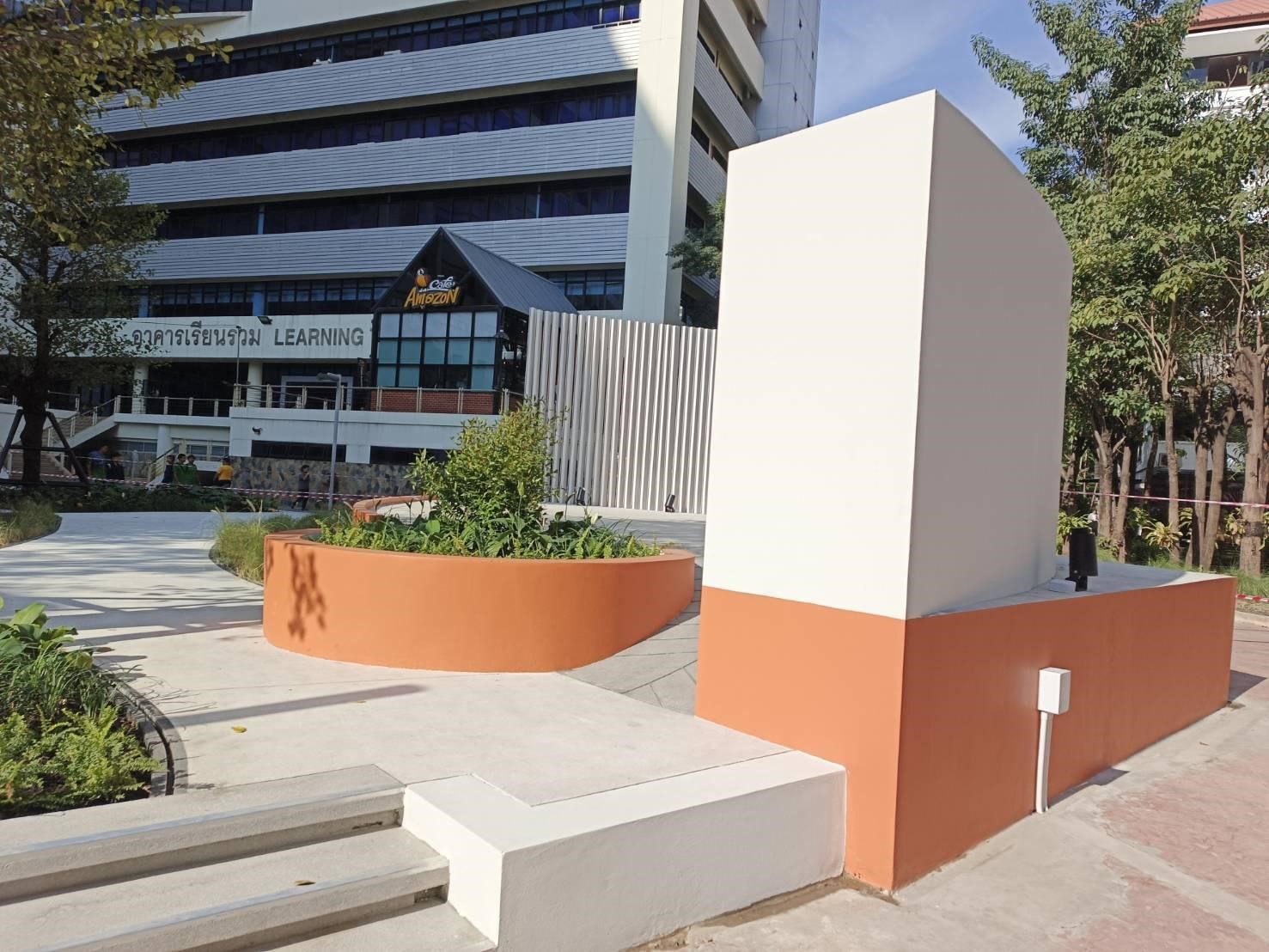
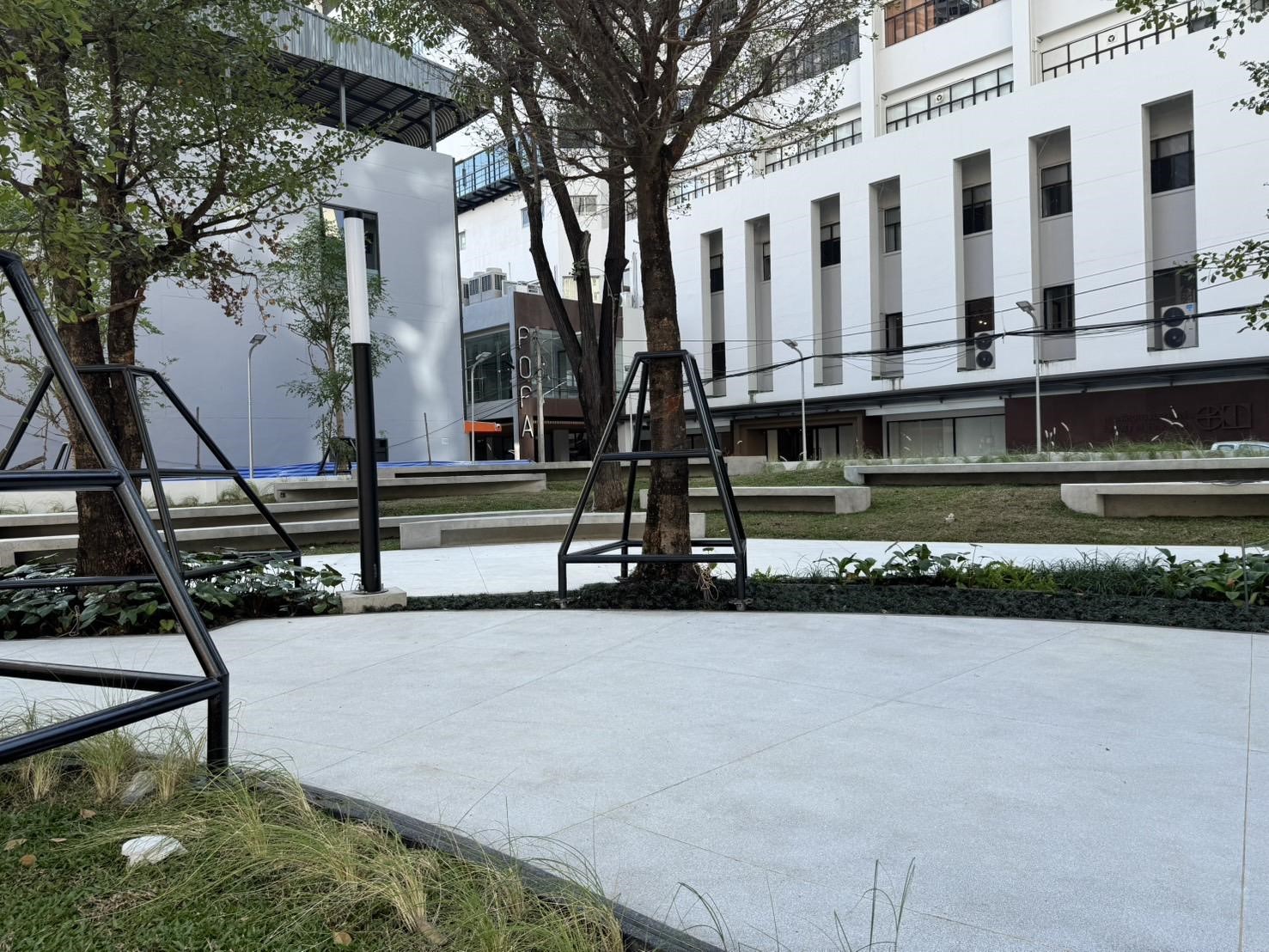
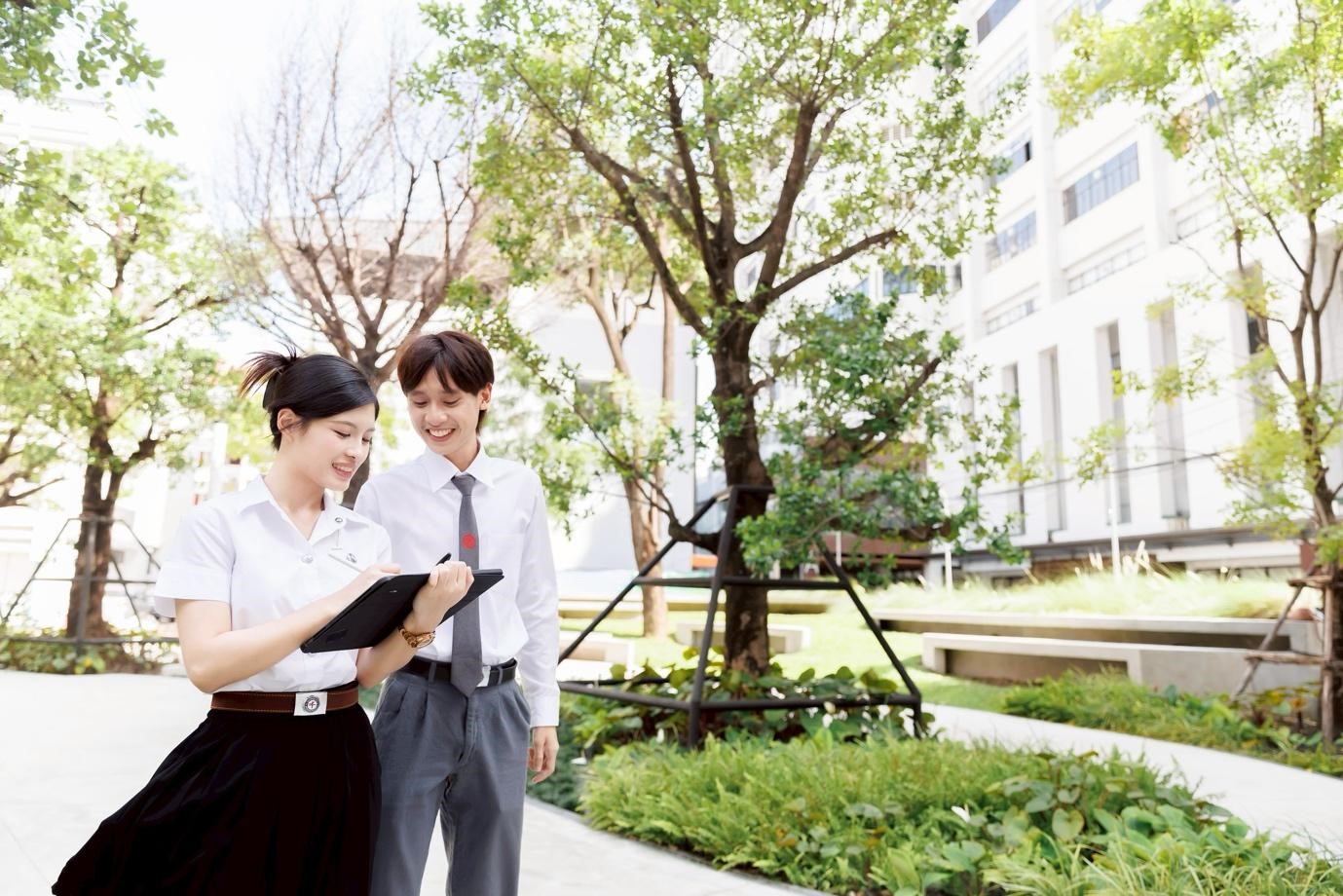
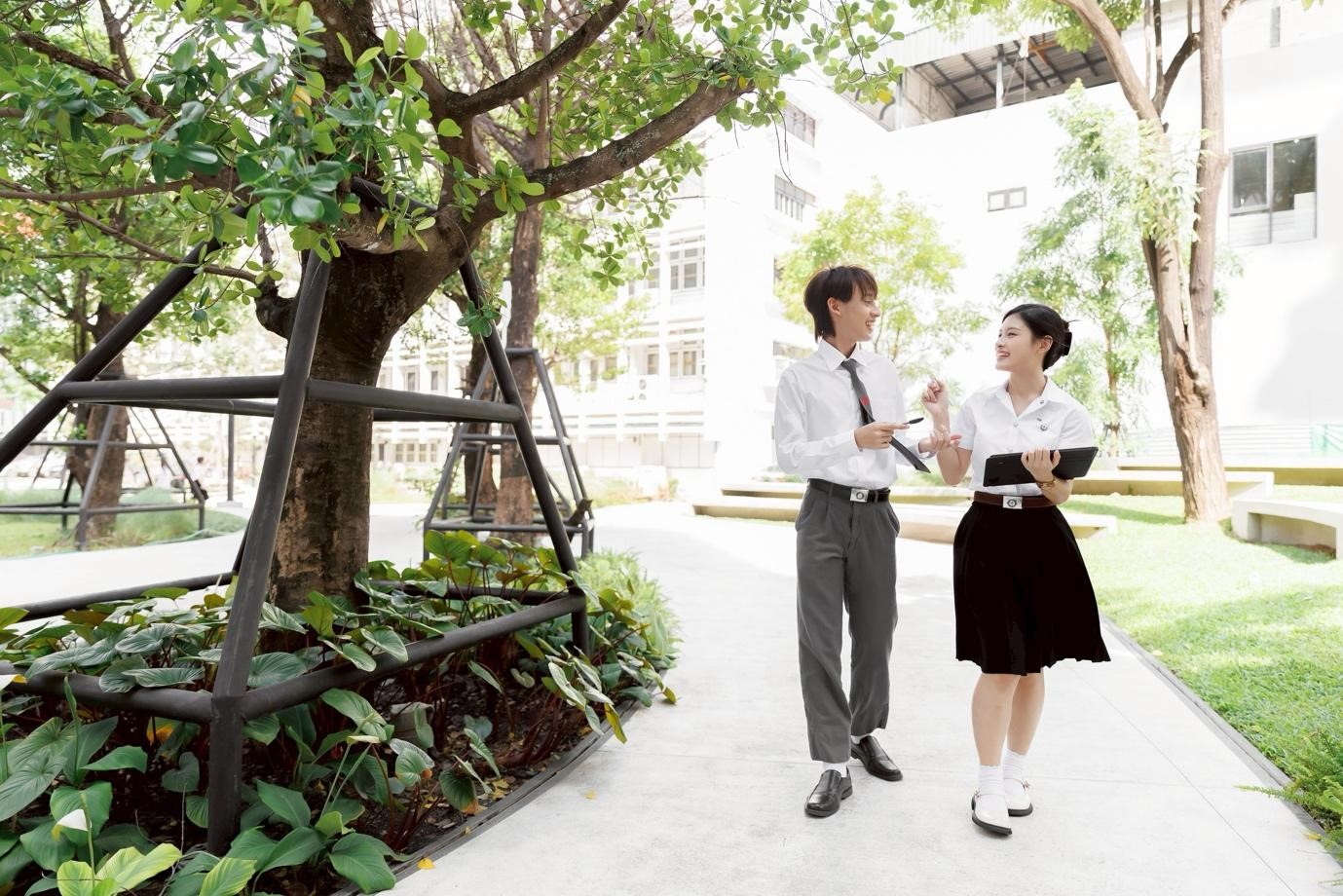
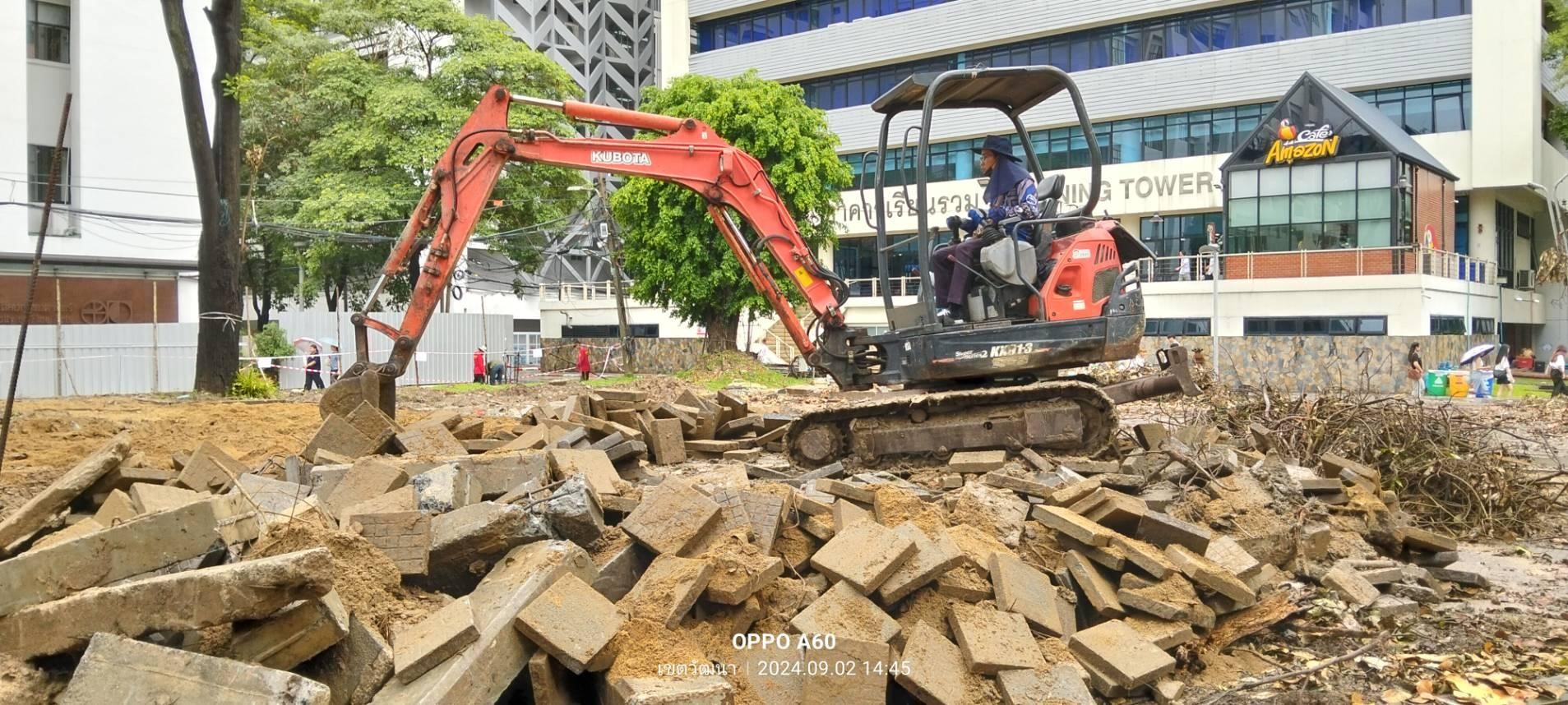
A previously deteriorated outdoor recreation area at the Prasarnmit campus was transformed into a modern, multifunctional space. The original architectural elements, including walkways, functional zones, universal design features, and the diversity of plant species, were carefully preserved. At the same time, new design enhancements were introduced to improve energy efficiency and support adaptive reuse. The revitalized area now serves as an inclusive space for persons with disabilities, a venue for performances, and a well-lit gathering area, thereby preserving its heritage while adding value to the campus environment. This transformation shows how a brownfield can become a space of creativity and student mindfulness areaSrinakharinwirot University recognises the importance of redeveloping brownfield sites as part of its physical planning and long-term sustainability strategy. Rather than leaving such spaces unused, the university prioritises the transformation of underutilised or deteriorated areas into functional, modern facilities. This approach contributes to sustainability by reducing land degradation, making efficient use of limited urban space, and aligning campus development with principles of resource efficiency and environmental responsibility.
A previously deteriorated outdoor recreation area at the Prasarnmit campus was transformed into a modern, multifunctional space. The original architectural elements, including walkways, functional zones, universal design features, and the diversity of plant species, were carefully preserved. At the same time, new design enhancements were introduced to improve energy efficiency and support adaptive reuse. The revitalized area now serves as an inclusive space for persons with disabilities, a venue for performances, and a well-lit gathering area, thereby preserving its heritage while adding value to the campus environment. This transformation shows how a brownfield can become a space of creativity and student mindfulness area.
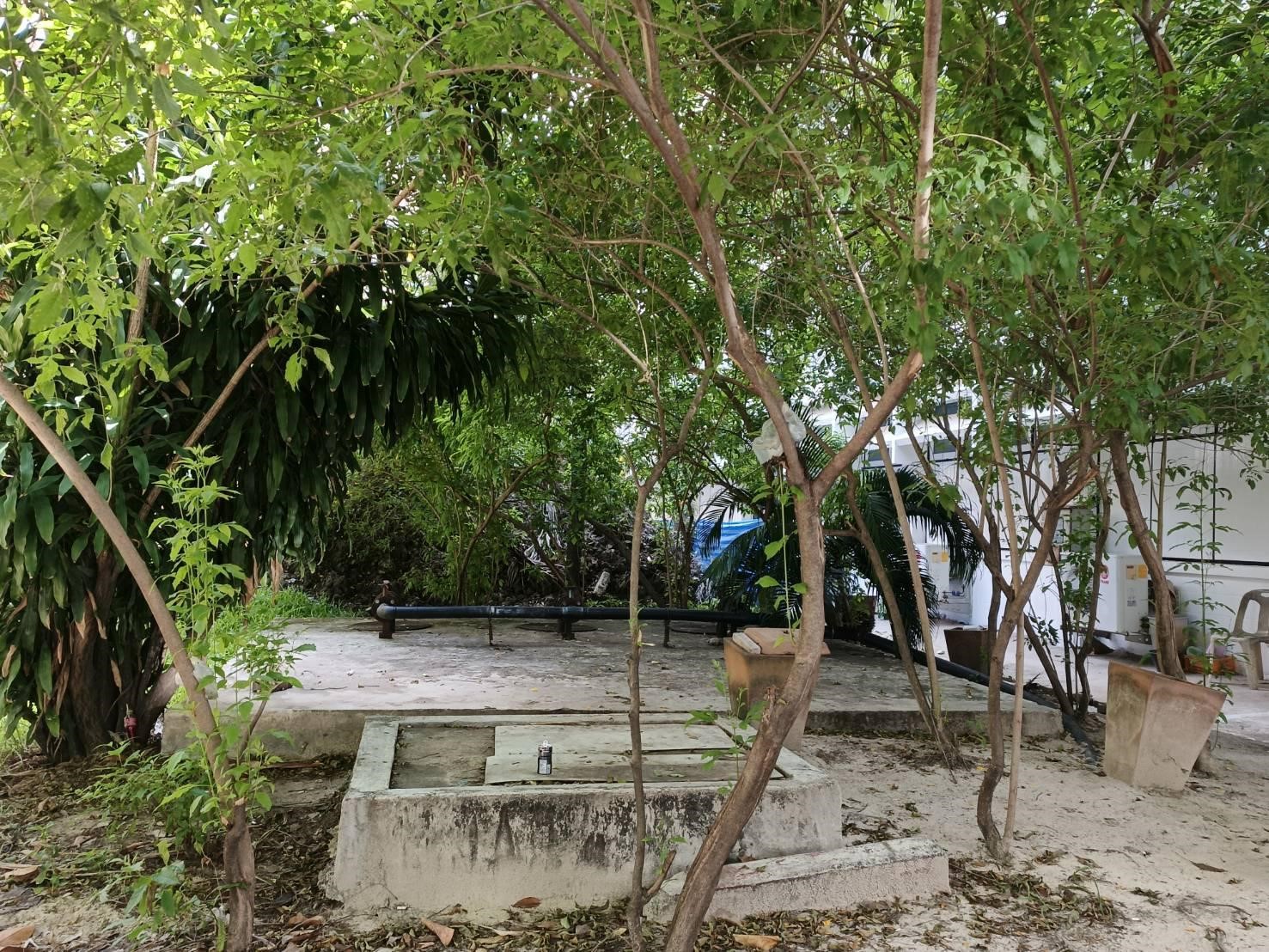
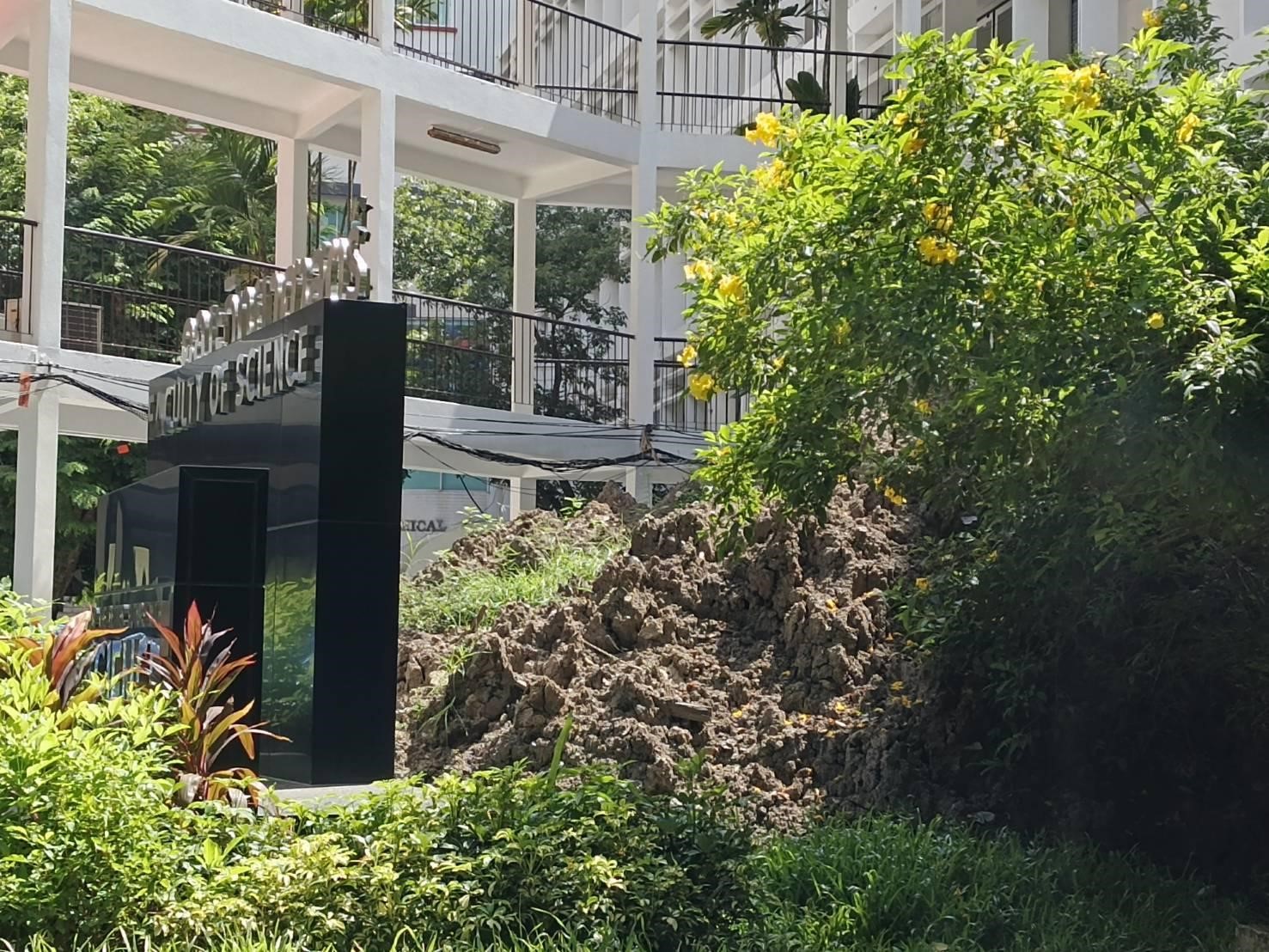
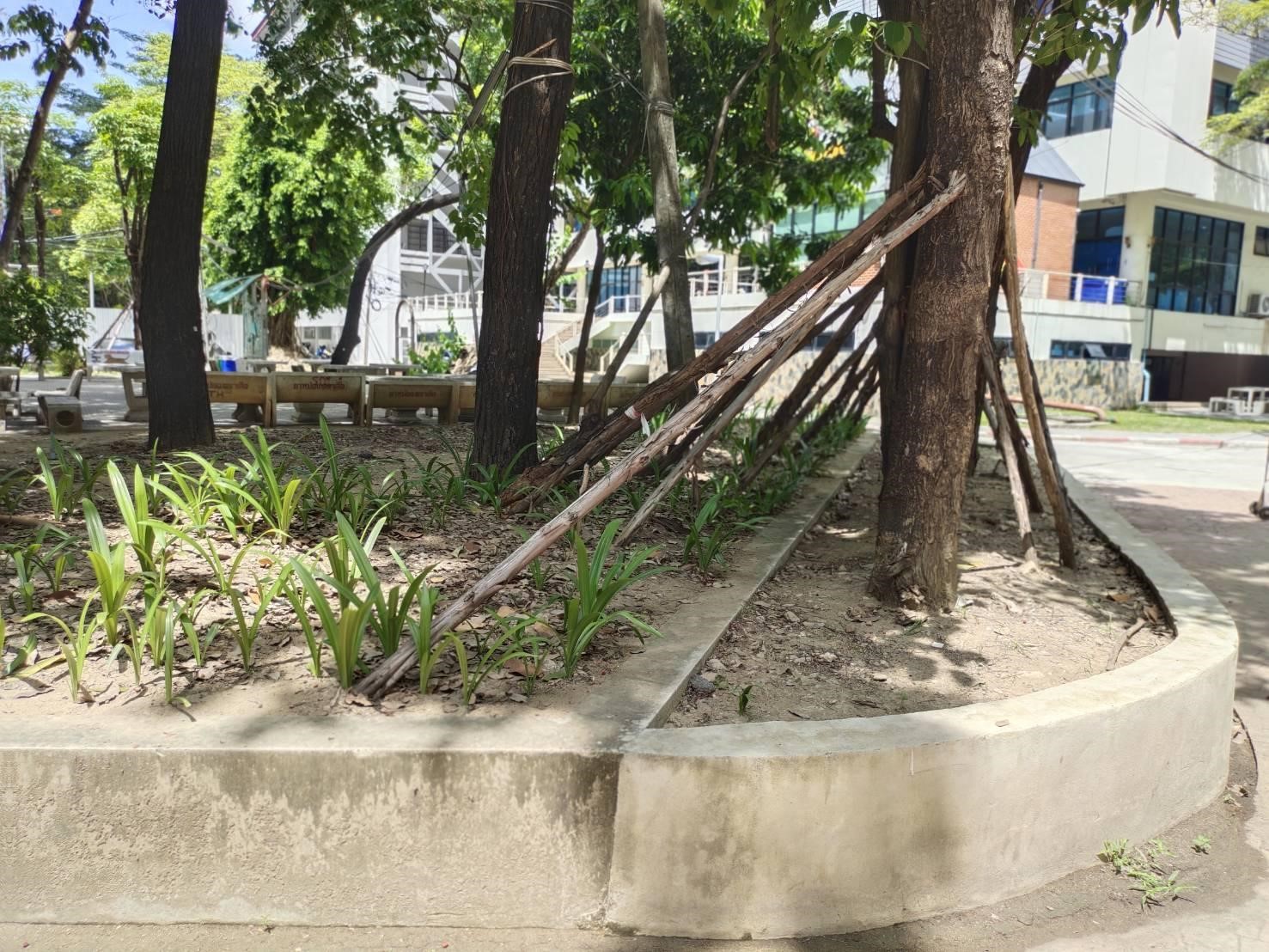
The area during renovation
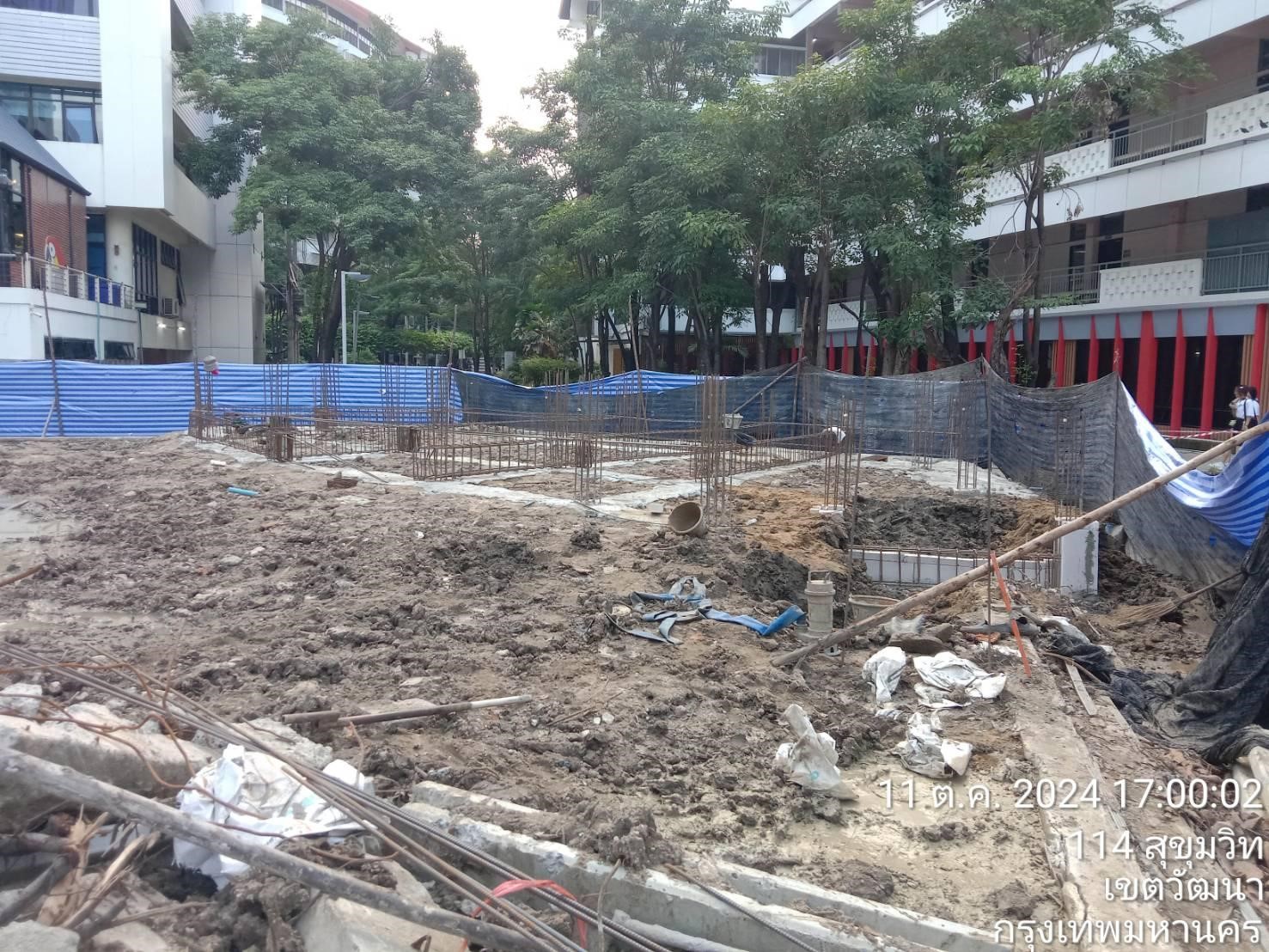
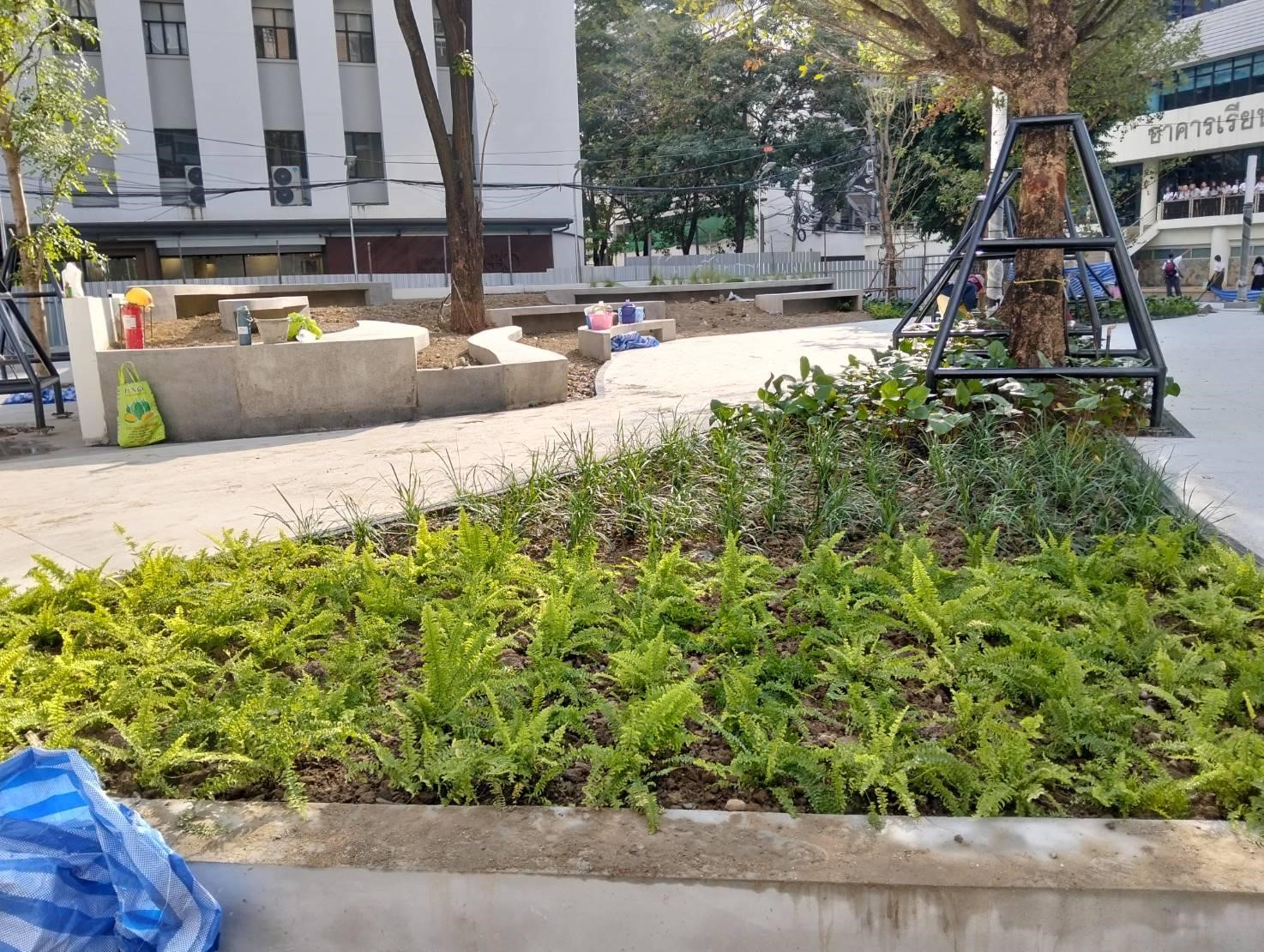
The area after renovation