1.4.1 Local start-up assistance
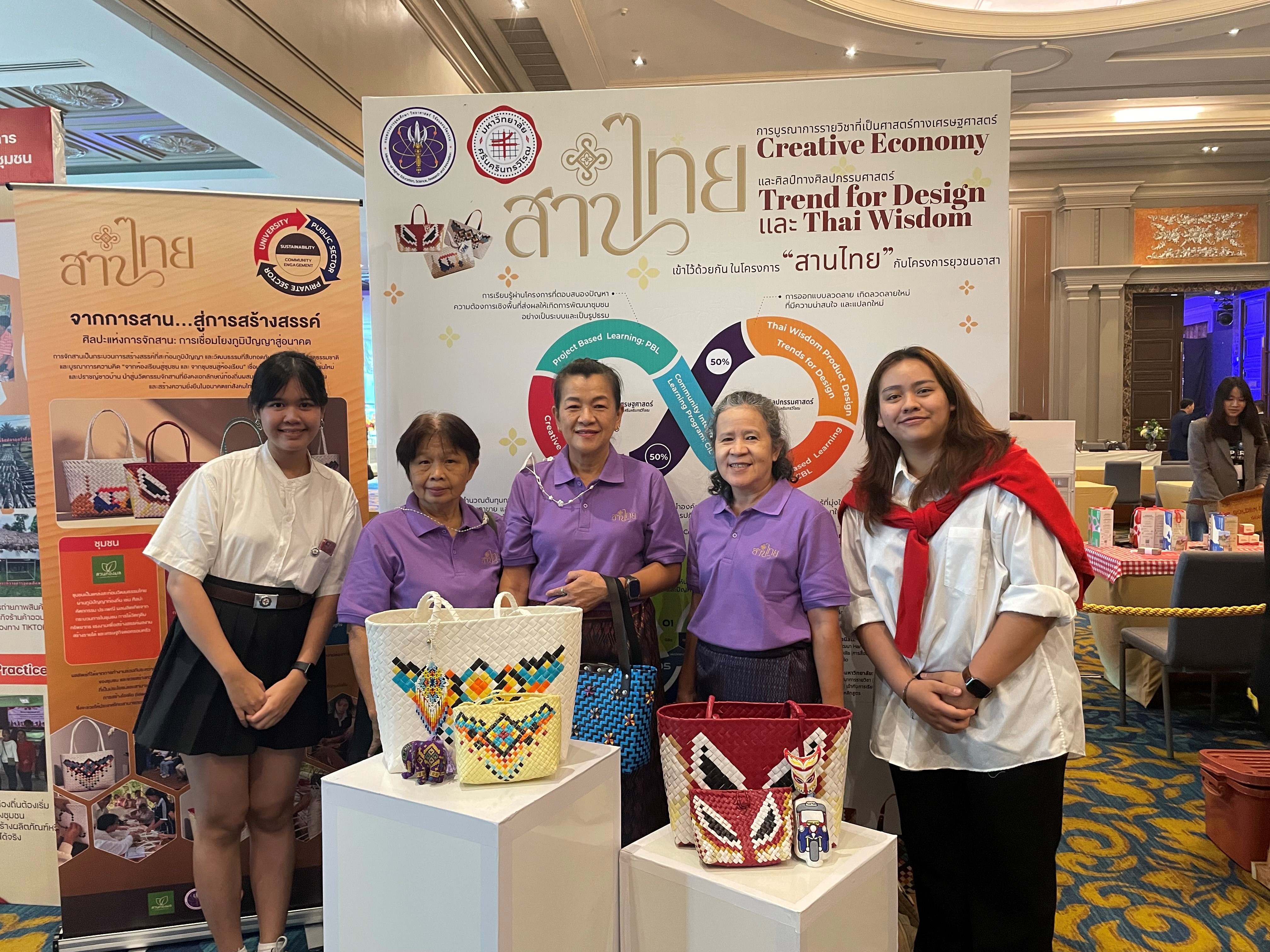
The “San Thai” Youth Volunteer Project for Fiscal Year 2024, organized by Srinakharinwirot University (SWU), was implemented under the policy of the Ministry of Higher Education, Science, Research and Innovation. The project promotes integrated learning that blends academic knowledge with community-based practice (CIL: Community Integrated Learning), enabling students to apply classroom learning in real-world contexts. It emphasizes meaningful, hands-on experience to develop 21st-century skills and produce graduates capable of contributing to sustainable community and social development.
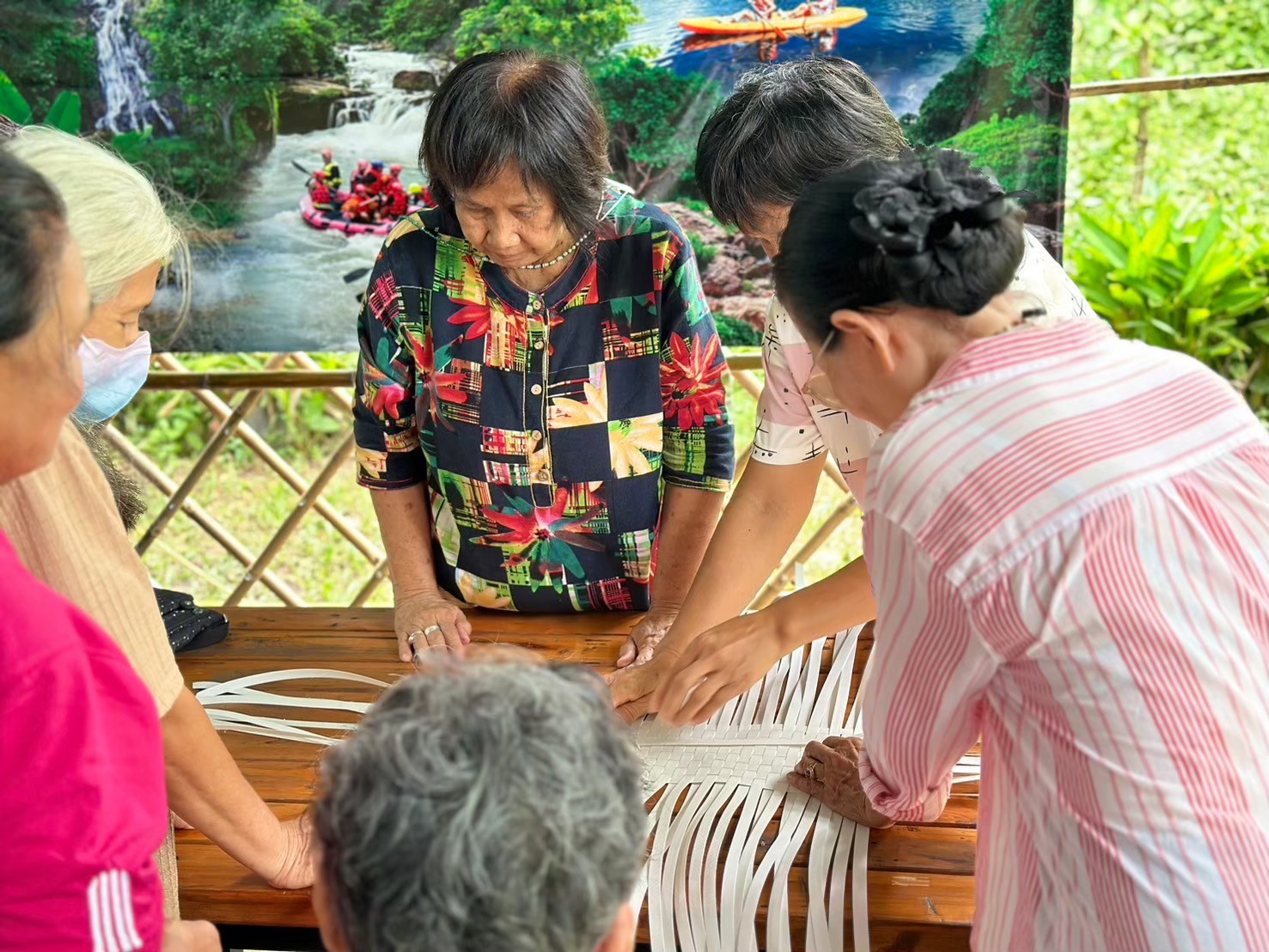
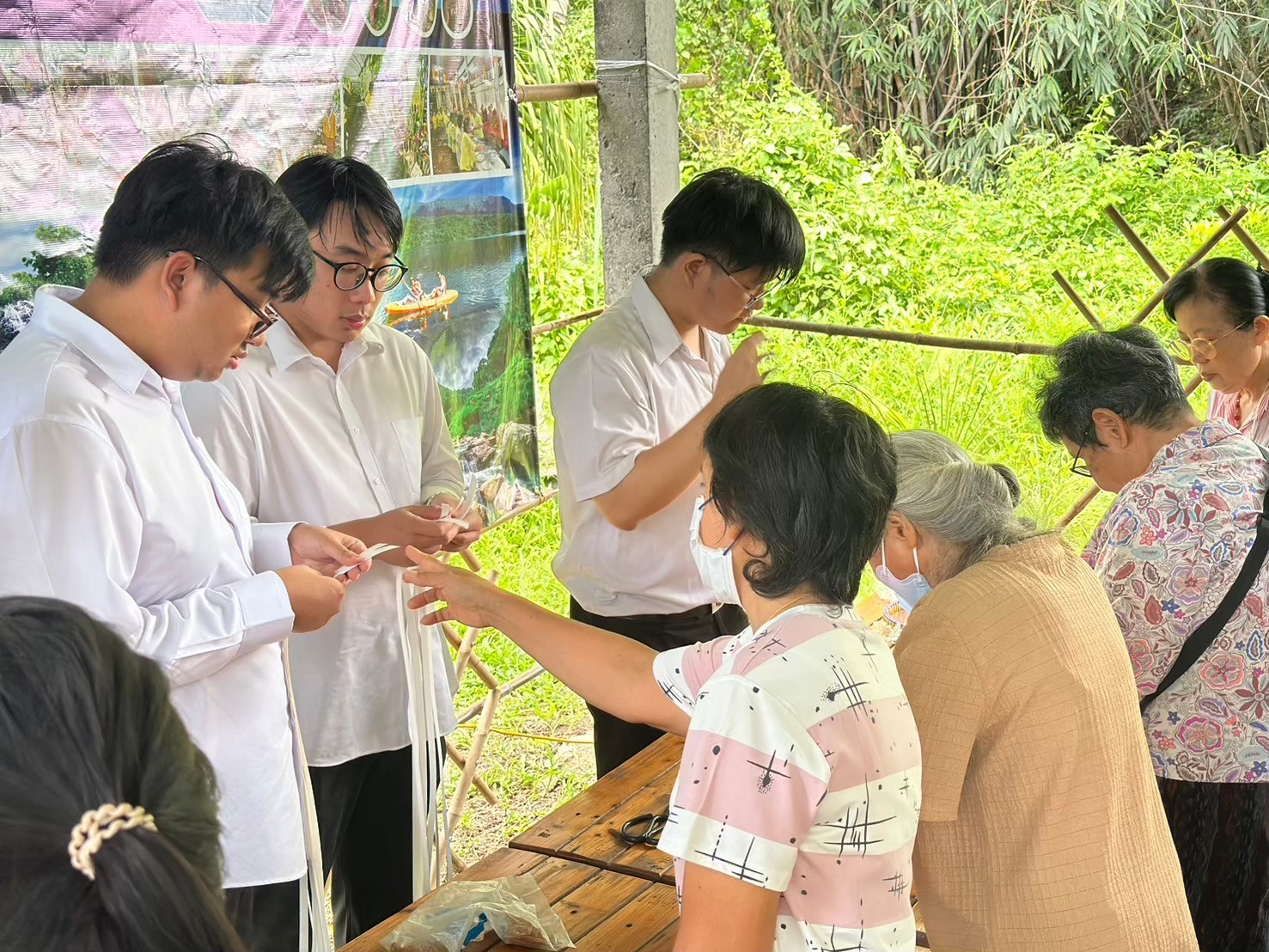
The university received budget support to implement the project at the Environmental Community Learning Center in Nong Saeng Sub-district, Pak Phli District, Nakhon Nayok Province. The selected community holds cultural capital in Thai Phuan weaving but faces challenges including high production costs, outdated designs, and limited marketing channels. To address this, the project provided free assistance to support the start-up and development of sustainable local businesses. Knowledge from the Faculty of Fine Arts (product design) and Faculty of Economics (marketing and value addition) was integrated with local expertise to co-create eco-friendly woven products that maintain Thai Phuan identity and showcase Thai cultural Soft Power. This provided students with real-world entrepreneurial experience while promoting intergenerational learning and strengthening the grassroots economy.
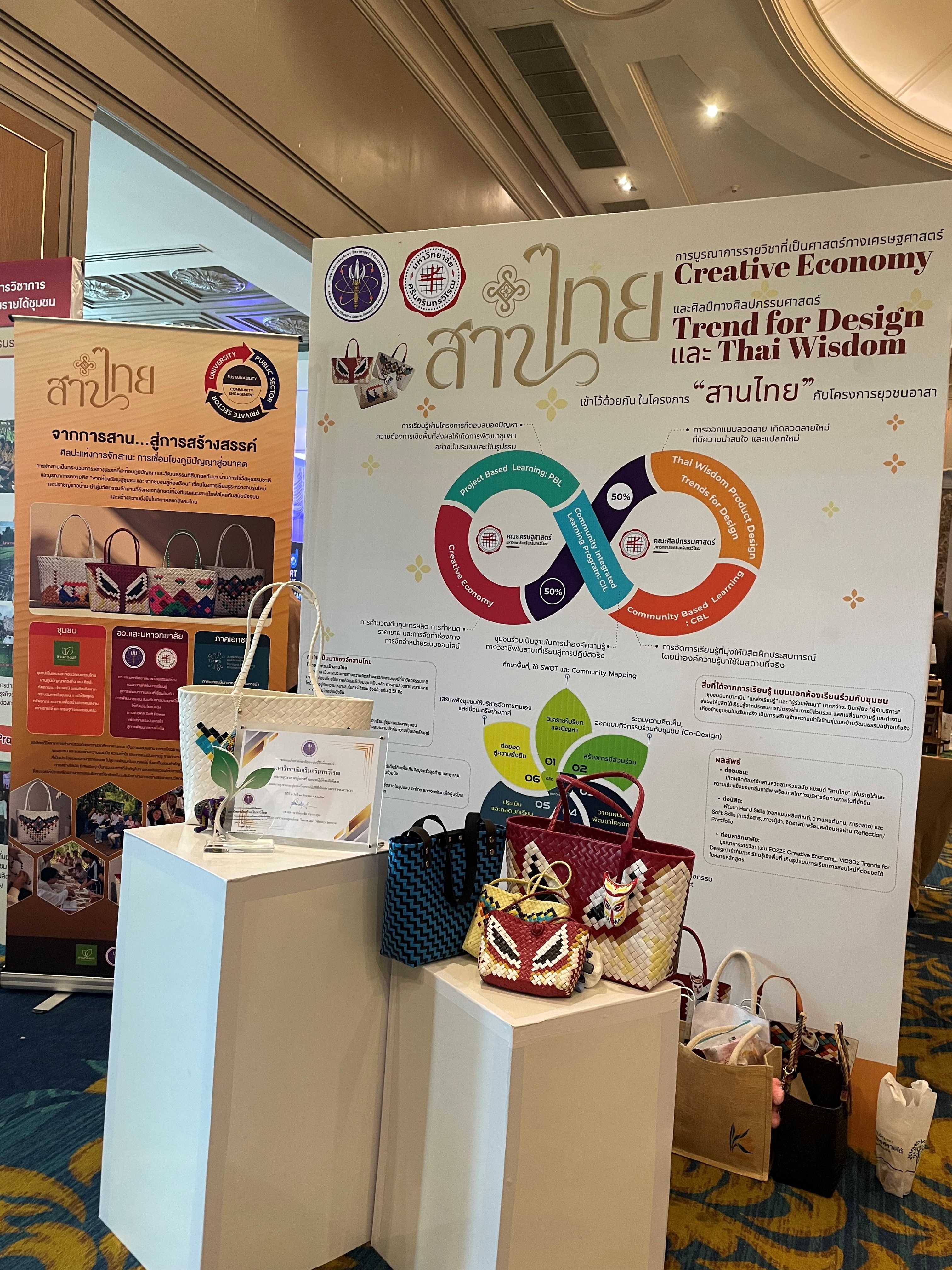
Operating under the concept of “Fostering Collaborative Power to Build a Strong, Self-Reliant Society Based on Culture, Thai Ways, and Community Participation,” the project followed a six-step sustainable development process grounded in the Sufficiency Economy Philosophy:
Context and community problem analysis using SWOT and Community Mapping
Participatory engagement through community forums and co-design
Project development based on the 3Ps: People, Process, Product
Hands-on practice designing contemporary woven products from recycled materials
Evaluation and learning reflection through After Action Review (AAR)
Scaling for sustainability via community self-management and network partnerships
The project successfully produced contemporary market-ready products under the “San Thai” brand, increasing community income and strengthening enterprise networks. Community enterprise members gained an average additional income of not less than 10,000 Baht per month through offline and online channels. Students developed critical thinking, communication, teamwork, and reflective learning skills aligned with Community Integrated Learning principles. The project was awarded “Excellent Best Practice” recognition.
Outcomes across key dimensions include:
• Students: Enhanced practical, entrepreneurial, and reflective learning skills
• Community: Increased supplementary occupations, higher income, enterprise cohesion through the “San Thai” brand
• Environment: Reduced plastic waste and improved resource efficiency
A Social Return on Investment (SROI) assessment reported a value of 1:1.6, indicating that every 1 Baht invested generated 1.6 Baht in social value. This demonstrates the project as an effective University for Society model that can be scaled and sustained long-term, contributing to local start-up support and socially sustainable business development in alignment with THE Impact Ranking SDG 1.4.1.